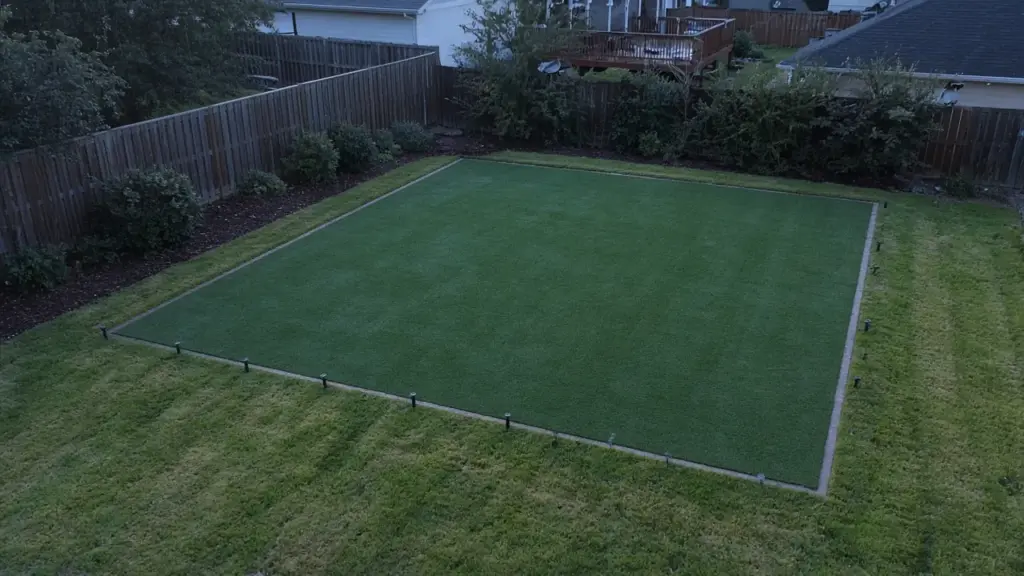
Artificial turf has become a common choice for Dallas backyards, dog runs, side yards, and areas where grass struggles, such as deep shade or heavy traffic. Synthetic turf does not need irrigation to stay green, but installing it still has a big effect on the sprinkler system. Zones that once watered grass need to be capped, rerouted, or repurposed, and nearby trees and beds still need water.
This guide explains how to plan irrigation changes when adding artificial turf.
Why Irrigation Planning Matters
Artificial turf is installed over a compacted base, often crushed rock or decomposed granite. Sprinkler heads, pipe, and valves in the turf area can interfere with installation and are hard to reach later. Heads left under turf can leak unnoticed, soaking the base and causing drainage and odor problems.
At the same time, areas around the turf, such as trees, beds, and remaining lawn, may share zones with the turf area. If those zones are simply shut off, nearby plants can suffer.
Step 1: Map the Existing System
Before turf installation:
- Run each zone and flag every head.
- Identify which zones cover the turf area and which cover other areas.
- Locate valves, valve boxes, and pipe routes.
- Note trees, beds, and lawn that share zones with the turf area.
Step 2: Decide What Each Zone Needs
For each affected zone:
- Zone covers only the turf area: cap the zone, or disconnect it at the valve.
- Zone covers turf and other areas: cap the heads in the turf area and keep the rest, adjusting nozzles as needed.
- Zone could be repurposed: convert it to drip for nearby beds or trees.
Capping Heads Properly
Heads in the turf area should be removed and capped at the pipe, not just turned off or left in place. Capping at the lateral fitting, below the turf base, prevents leaks under the turf. Pressure-test the zone afterward to confirm no leaks.
If an entire zone is abandoned, consider capping it at the valve or disconnecting the valve so no water enters those lines. Keep in mind that abandoned lines may still be useful later if you ever remove the turf.
Rerouting Pipe
Sometimes pipe running through the turf area feeds heads beyond it. That pipe can stay in place if it is sound, but it becomes hard to reach under turf. Some homeowners reroute pipe around the turf area, or install sleeves to make future access easier. Our guide to redesigning zones after adding a pool or patio covers similar rerouting decisions.
Protecting Trees
Trees in or near turf areas still need water. Their roots extend well beyond the canopy, often under the new turf. When grass irrigation stops, trees can lose a major water source.
Options include:
- Drip rings or bubblers around trees
- A dedicated drip zone for trees
- Leaving an unturfed area around the trunk
Our guide to watering trees with drip rings and bubblers explains setups.
Beds Next to Turf
Beds bordering turf should be watered with drip to keep water in the bed and off the turf. Spray heads in beds often overspray onto turf, which does not need water.
Remaining Lawn
If part of the yard remains natural grass, adjust heads near the turf edge so they spray away from the turf. Partial-arc nozzles and the right radius keep water on the grass.
Cooling and Rinsing Turf
Artificial turf can get very hot in direct Dallas sun. Some homeowners rinse turf to cool it or to clean pet areas. A hose is typically enough. If you want an automated rinse system, keep Dallas rules in mind: automatic irrigation systems and hose-end sprinklers are limited to two assigned days per week and prohibited between 10 a.m. and 6 p.m. year-round. Check current city guidance about watering synthetic turf with sprinklers before installing such a system.
Drainage Under Turf
Artificial turf needs good drainage. Rain and rinse water pass through the turf backing into the base. If the base does not drain well, or if leaking pipes add water, puddles and odors can develop. In Dallas clay, planning drainage under turf is important. Our drainage service covers drainage improvements.
Controller Updates
After turf installation:
- Remove or disable zones that no longer serve plants
- Adjust run times for zones with fewer heads
- Add drip zones for trees and beds
- Relabel zones
- Confirm the rain and freeze sensor works
Foundation Considerations
When grass near a foundation is replaced with turf, the soil there may receive less water. In Dallas clay, consistent moisture near foundations matters. Dallas allows foundation watering on any day and at any time using a hand-held hose, soaker hose, drip irrigation, or bucket. A drip line or soaker hose along the foundation may be worth considering. Our guide to foundation watering with drip lines covers setups.
Planning Checklist
- Flag heads and map zones before installation
- Decide which zones to cap, keep, or convert
- Cap heads at the pipe below the turf base
- Protect trees with drip
- Convert bed irrigation to drip
- Adjust heads along turf edges
- Plan drainage under turf
- Update the controller
Working With the Turf Installer
Coordinate irrigation changes with the turf installer before work begins. Agree on who caps heads and when, and schedule irrigation work before the base is laid. Once the base is compacted and turf installed, fixing a forgotten head means cutting into the turf.
Test Before the Turf Goes Down
After capping heads and rerouting lines, pressurize the system and run each affected zone before the base is installed. Walk the turf area and look for wet spots or bubbling. A leak discovered at this stage takes minutes to fix. The same leak discovered after the turf is installed means pulling back turf and base material.
Artificial Turf in Side Yards and Dog Runs
Side yards and dog runs are among the most common places for artificial turf in Dallas. These areas are often shaded, narrow, or heavily used, which makes grass difficult. Irrigation in these spots was often poor to begin with, with spray heads hitting fences and siding. When converting, capping those heads below the base removes a common source of overspray and wasted water. Pet areas benefit from good base drainage and occasional rinsing with a hose.
Should You Replace the Whole System?
Adding artificial turf to one area rarely requires replacing the whole system. More often, it is a chance to fix old problems in the remaining zones. If the system is aging and several zones are being changed at once, it may make sense to evaluate the whole system. Our guide to whether it is time to replace your sprinkler system and our installation and retrofit guide can help you weigh the options.
Keep a Record of Capped Lines
Once turf is down, capped heads and abandoned pipe are invisible. Sketch where lines were capped and which zones changed, and keep that sketch with your controller notes. If you ever remove the turf or need to trace a leak, you will know exactly where the old lines run.
Frequently Asked Questions
Do I need to remove sprinkler heads before installing artificial turf?
Heads in the turf area should generally be removed and the pipe capped below the turf base to prevent hidden leaks.
Will trees suffer if I replace grass with turf?
They may lose a water source. Add drip rings or bubblers so trees continue to receive water.
Can I use my sprinkler system to cool artificial turf?
Automatic sprinkler use is limited by Dallas rules. A hose is typically enough for occasional rinsing. Check current city guidance before automating.
What happens to zones that only watered the turf area?
They can be capped at the valve or disconnected, or repurposed for drip in nearby beds or trees.
Get Help Reworking Your Zones
We cap heads, reroute lines, and add drip for trees and beds around artificial turf. See our irrigation services, or contact us to schedule.
Request Service or call 214-227-7444
We serve homes throughout Dallas and nearby North Texas communities.