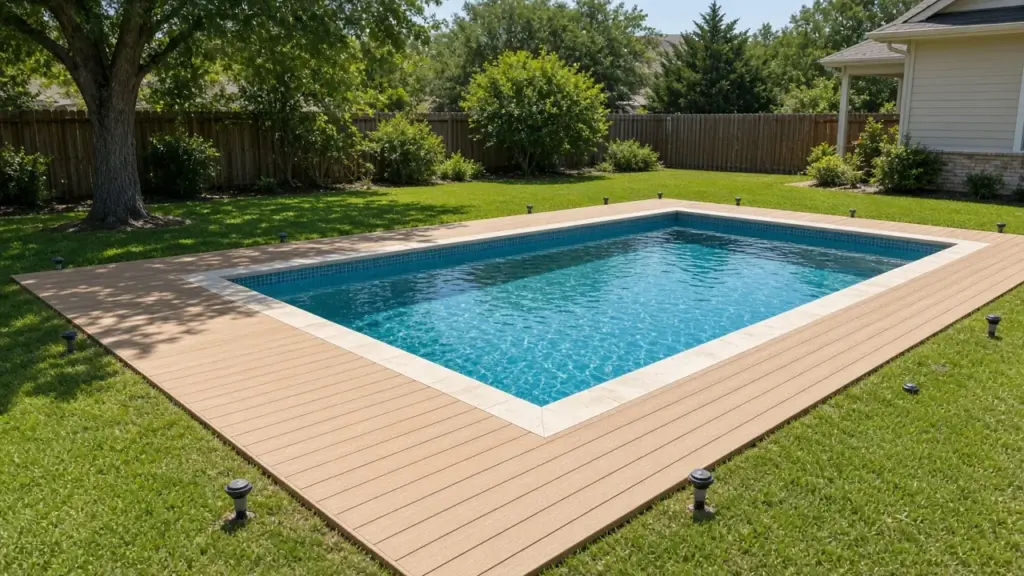
A new pool, patio, or outdoor kitchen transforms a backyard. It also changes everything about how that yard is watered. Heads that once covered open lawn now spray onto pavers or into the pool. Pipes may have been cut during excavation. Zones designed for a large rectangle of grass now serve narrow strips and new planting beds.
Redesigning irrigation after hardscape work is not just about fixing damage. It is a chance to rethink the zones so water goes where it is needed. This guide walks through the process.
Plan Irrigation Before Construction If You Can
The best time to plan irrigation changes is before the pool or patio goes in. Talk with the pool builder or landscape contractor early about:
- Where existing pipes and heads are, so they can be protected, capped, or rerouted
- Sleeves under new hardscape, so pipe or wire can pass under the patio or pool deck later
- The new layout of lawn and beds, so irrigation can be designed around it
- Who is responsible for irrigation repairs during construction
Installing sleeves, which are empty sections of pipe under new concrete, is inexpensive during construction and very difficult afterward. Our guide to repairing sprinkler pipe under sidewalks and driveways shows why sleeves matter.
Assess the Damage After Construction
Pool excavation and patio grading often cut irrigation lines and bury heads. After construction:
- Run each zone and walk the yard.
- Look for zones that do not come on, geysers, dry areas, and heads spraying hardscape.
- Locate cut pipes and capped lines.
- Check valve boxes, which may have been buried or damaged.
- Check controller wiring, which may have been cut.
Our guide to finding buried valve boxes can help if boxes were covered.
Rethink the Zones
A new layout usually means the old zone plan no longer fits. Think about how the yard is now divided:
- Remaining lawn areas, often smaller or irregularly shaped
- New planting beds around the pool or patio
- Narrow strips between hardscape and fences
- Container plants on the patio
- Areas that should stay dry, such as pool decks and seating
Each type of area has different watering needs. Lawn, beds, and narrow strips generally should not share a zone.
Keep Water Off the Pool and Patio
Overspray onto a pool deck or patio wastes water, creates slip hazards, and can stain stone and pavers. Sprinkler water in the pool adds minerals, debris, and fertilizer residue. Design lawn coverage so heads along hardscape spray away from it:
- Use partial-arc nozzles along edges.
- Choose appropriate radius nozzles so water stops at the edge.
- Consider strip nozzles for narrow lawn areas.
- Place heads a short distance from hardscape edges where possible.
Our guide to fixing heads that spray the street, driveway, or house wall covers adjustment techniques.
Switch Beds to Drip
New planting beds around a pool or patio are ideal for drip irrigation. Drip keeps water in the bed, off the hardscape, and out of the pool. It also works well for narrow beds where spray heads would inevitably hit pavement. Drip zones need a filter and pressure regulator.
Narrow Lawn Strips
Narrow grass strips are among the hardest areas to water with spray heads. Options include:
- Side strip and end strip nozzles designed for rectangular areas
- Low-radius rotary nozzles with lower application rates
- Subsurface drip for very narrow strips
- Replacing the strip with a planting bed or hardscape
Adding or Splitting Zones
If existing zones now serve a mix of lawn and beds, splitting them into separate zones gives you better control. This may involve adding a valve, running new wire to the controller, and making sure the controller has enough stations.
Water supply limits how many heads each zone can run. When rerouting pipe and adding heads, keep each zone within the available flow and pressure. Overloaded zones lead to weak coverage.
Matched Precipitation
When mixing old and new heads, keep each zone consistent. Spray heads and rotors apply water at very different rates, and they should not share a zone. Our guide to matched precipitation explains why it matters.
Controller Updates
After redesigning, update the controller:
- Relabel zones to match the new layout
- Set run times for new zones based on head type and area
- Put drip zones on their own program
- Confirm Dallas watering days and that watering ends before 10 a.m.
Protecting the Pool Equipment Area
Pool equipment pads, with pumps, filters, and heaters, should stay dry. Make sure no heads spray toward the equipment, and keep the backflow preventer and irrigation valves accessible. Coordinate the location of irrigation equipment with pool equipment to avoid crowding.
Drainage Around New Hardscape
Patios and pool decks change how water drains across a yard. Water shed from pavement can create wet areas in adjacent lawn or beds. If an area near the new hardscape stays soggy, the cause may be drainage rather than irrigation. Our drainage service addresses these problems.
A Checklist for Redesign
- Map the new layout of lawn, beds, and hardscape
- Locate existing pipes, valves, and wiring
- Identify damage from construction
- Plan zones by area type
- Choose heads and nozzles that keep water off hardscape
- Use drip for beds and containers
- Stay within flow and pressure limits
- Update and relabel the controller
- Test every zone and adjust
Working With Your Contractors
Irrigation changes around new construction work best when the pool builder, landscaper, and irrigation contractor coordinate. Share plans early, agree on who handles sleeves and repairs, and schedule irrigation work before sod and final landscaping go in. That sequencing prevents damage to new turf and makes trenching easier.
Check Again After the First Season
New landscapes settle. Plants grow, sod knits in, and soil settles around new pipe. After the first season, walk each zone again, raise or lower heads as needed, and adjust nozzles as plants fill in. Beds that looked sparse in spring may block spray patterns by late summer, which is another reason drip suits beds.
Water Features and Outdoor Kitchens
Outdoor kitchens, fire pits, and water features bring their own considerations. Keep irrigation spray away from grills, electrical outlets, and appliances. Route irrigation pipe and wire away from gas lines and electrical conduit, and always call 811 before digging. If a water feature has an automatic fill line, it should have its own connection and backflow protection rather than being tied casually into irrigation lines.
Reusing Existing Components
Not everything has to be replaced. Valves, the controller, and the backflow preventer can often stay in place if they are in good condition and still located sensibly. Mainline pipe that survived construction may be reused, with new laterals branching off to serve the redesigned areas. An evaluation of what survived can reduce the scope of the redesign.
Frequently Asked Questions
Do I need to redesign my sprinkler system after adding a pool?
Usually. Construction often cuts lines, and the new layout typically requires different zones, nozzles, and coverage.
How do I keep sprinklers from spraying into the pool?
Use partial-arc and properly sized nozzles along hardscape edges, and water beds near the pool with drip.
What are sleeves, and why do they matter?
Sleeves are empty pipes placed under new concrete so irrigation pipe or wire can pass beneath it later.
Can I add zones to my existing controller?
If the controller has open stations, yes. Otherwise you may need an expansion module or a new controller.
Get Help Redesigning Your Zones
We rework irrigation after pools, patios, and landscape changes. See our irrigation services, or contact us to schedule.
Request Service or call 214-227-7444
We serve homes throughout Dallas and nearby North Texas communities.