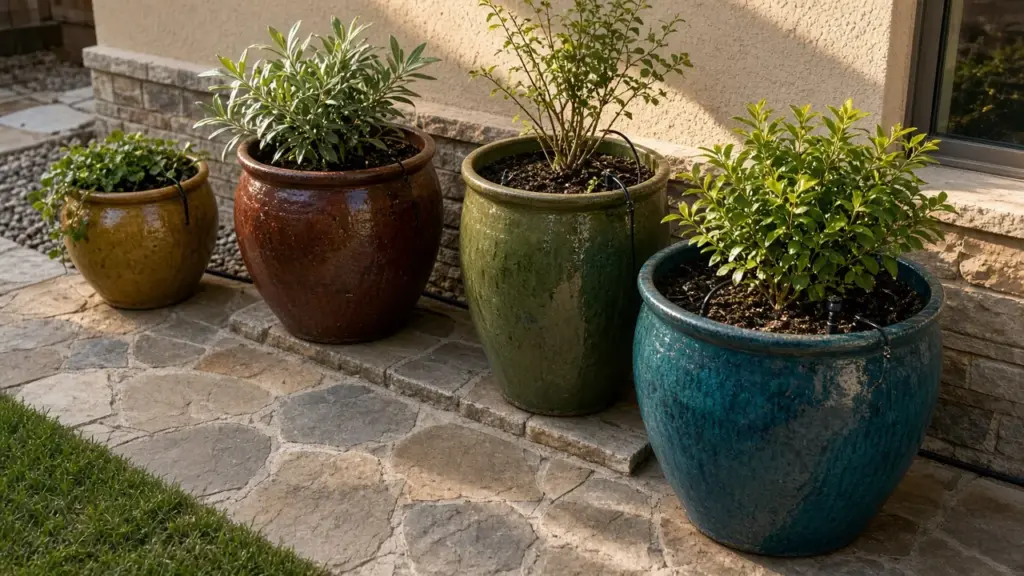
Containers and planters bring color to patios, porches, balconies, and pool decks. They also dry out quickly, especially in Dallas summers, when a pot in full sun can go from moist to bone dry in a day. Hand watering works, but it is easy to miss a day, and a missed day in July can mean a lost plant.
A container drip system solves that problem by delivering water directly to each pot on a schedule. This guide explains how container drip works, how to set it up, and how to manage it through the seasons.
Why Containers Need Special Attention
Containers have limited soil volume, so they hold less water than the ground. Pots are also exposed on all sides to heat and wind. Dark pots absorb heat. Terra cotta and unglazed clay lose moisture through their walls. Hanging baskets dry out fastest of all.
In Dallas heat, many containers need water daily or close to it in summer, while in-ground beds and lawns can go days between waterings. That difference is why containers should have their own drip zone or program.
Dallas Rules and Drip
Dallas limits automatic sprinklers and hose-end sprinklers to two assigned days per week and prohibits sprinkler watering between 10 a.m. and 6 p.m. year-round. Drip irrigation, soaker hoses, and hand watering are allowed on any day. That makes drip a practical choice for containers that need frequent watering.
Ways to Supply Water
From an Existing Drip Zone
If you already have a drip zone near the patio, you may be able to extend it to containers. The container area should ideally have its own zone, though, since pots need more frequent water than beds.
From a Converted Spray Head
A spray head near the patio can be converted into a drip supply point using a conversion kit. The kit replaces the head with a filter, pressure regulator, and fitting for drip tubing. Our guide to converting spray zones in flower beds to drip explains conversions.
From a Hose Bib With a Battery Timer
For a small group of pots, a battery-operated hose timer with a backflow preventer, filter, and pressure regulator can supply a simple drip system. This is a common solution for balconies and patios without irrigation nearby. Make sure the setup includes backflow protection.
Core Components
- Filter to keep debris out of small emitters
- Pressure regulator to reduce pressure to drip levels
- Supply tubing, typically half-inch or similar, running near the containers
- Distribution tubing, smaller quarter-inch tubing from the supply line to each pot
- Emitters, stakes, or bubblers in each pot
Our guide to drip filters and pressure regulators covers why the first two components matter.
Choosing Emitters
Containers vary in size, so emitter choice matters:
- Small pots may need a single low-flow emitter.
- Large pots and planters often need two or more emitters, or an adjustable emitter, to wet the soil evenly.
- Hanging baskets need emitters secured so they do not pull out.
- Adjustable emitters let you fine-tune flow for pots with different needs.
Pressure-compensating emitters deliver consistent flow along the line, which helps when pots are at different heights or distances.
Running Tubing Neatly
Tubing on a patio can look messy. Tips for a clean installation:
- Run supply tubing along walls, edges, or behind planters.
- Bring quarter-inch tubing up the back of each pot.
- Use tubing clips or stakes to keep lines in place.
- Choose brown or black tubing to blend in.
- Plan the route so tubing does not cross walkways.
Scheduling Container Drip
Container needs change dramatically with the seasons:
- Summer: many containers need daily watering, sometimes more for small pots in full sun.
- Spring and fall: every few days may be enough.
- Winter: water only as needed; many containers need very little.
Start with a schedule based on the thirstiest pots and adjust emitters so smaller or shaded pots get less. Check soil moisture with a finger a couple of inches down. Water should drain from the bottom of the pot, which shows the root zone is fully wet.
Drainage Matters
Every container needs drainage holes. Without them, drip irrigation can quickly waterlog soil and drown roots. Raise pots slightly with pot feet so water drains freely and does not stain patios.
Grouping Containers
Grouping containers with similar needs makes drip easier to manage. Sun-loving plants in large pots can share a line; shade plants in smaller pots may need separate emitters with lower flow. If some pots need much more water than others, consider separate lines or zones.
Maintenance
- Clean the filter regularly.
- Check emitters for clogs, especially in hard water areas.
- Look for tubing damage from sun, pets, or foot traffic.
- Adjust emitters as plants grow or are replaced.
- Flush lines occasionally by opening end caps.
Our guide to drip emitters clogging explains how to prevent and clear clogs.
Protecting Container Drip in Winter
Above-ground tubing and fittings are exposed to freezing temperatures. Before a hard freeze, turn off the supply, drain the lines if possible, and protect or remove battery timers. Our guide to why pipes burst in Dallas even though freezes are short explains why exposed components are vulnerable.
Common Mistakes
- One emitter for a large pot, leaving dry areas
- No filter, leading to clogged emitters
- Watering on the same schedule as the lawn, which is often not enough for containers in summer
- No drainage holes in containers
- Forgetting to adjust the schedule in fall and winter
Rooftop and Balcony Considerations
Containers on balconies and rooftop terraces face even more heat and wind. Drip helps, but make sure water drains properly and does not damage surfaces below. Use saucers or trays where needed, and check local building or HOA rules.
Checking the System After Changes
Whenever you add, remove, or move a container, check the drip layout. An emitter left behind when a pot is removed will spray or drip onto the patio. Plug unused holes in tubing with goof plugs, which are small caps designed for that purpose. After adding a pot, run the zone and watch that water reaches the new container and drains from the bottom.
Potting Mix and Water Holding
The soil in a container affects how often it needs water. Quality potting mixes hold moisture and drain well. Garden soil or clay from the yard packs down in pots and drains poorly, which can lead to soggy roots with drip. Adding a layer of mulch on top of the potting mix reduces evaporation and helps pots last longer between waterings in summer. Our drip irrigation repair guide covers other drip components and common repairs.
Frequently Asked Questions
Can I water containers any day in Dallas?
Yes. Drip irrigation and hand watering are allowed on any day. The two-day limit applies to automatic sprinklers and hose-end sprinklers.
How often should container drip run in summer?
Many containers need daily watering in Dallas summer heat. Check soil moisture and adjust.
How many emitters does a large pot need?
Large pots and planters often need two or more emitters to wet the soil evenly.
Do I need a filter for container drip?
Yes. A filter keeps debris out of small emitters and prevents clogs.
Get Help Setting Up Container Drip
We install and repair drip systems for containers, planters, and patios. See our sprinkler repair service, or contact us to schedule.
Request Service or call 214-227-7444
We serve homes throughout Dallas and nearby North Texas communities.