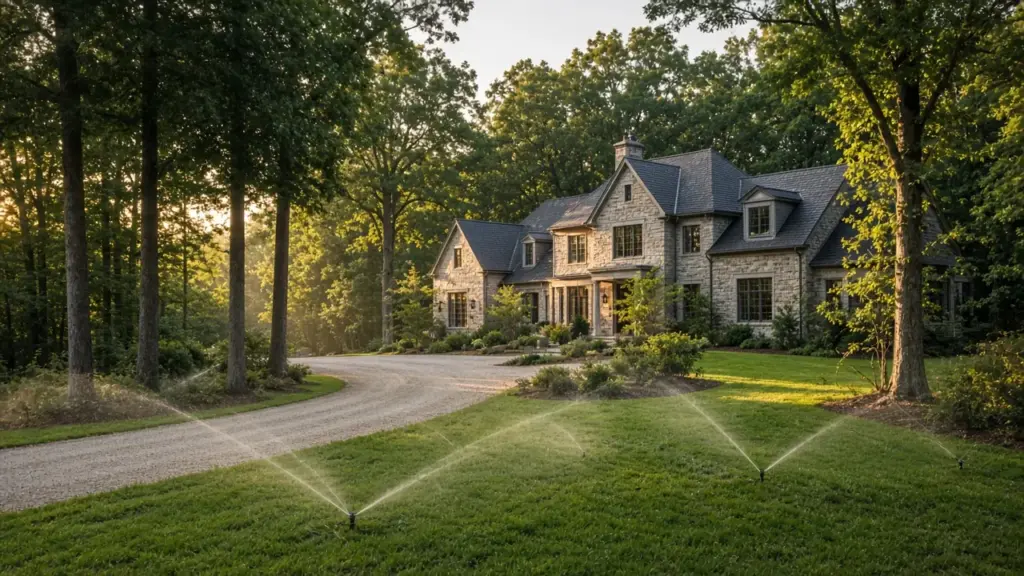
Preston Hollow is known for large residential lots, established landscapes, and mature shade trees. Those features make the neighborhood beautiful, and they also make irrigation more complicated than on a typical suburban lot. A large property may have many zones, long pipe runs, a mix of deep shade and full sun, and tree roots that compete with pipe for space.
This guide covers the irrigation issues that come up most often on large, wooded Dallas lots and how to keep a system running efficiently. The same principles apply to similar properties anywhere in the city.
Large Lots Mean Many Zones
A bigger yard usually means more zones, and more zones mean more valves, more wire, and more heads to maintain. It also means scheduling becomes tricky. Dallas limits automatic irrigation to two assigned days per week, with no sprinkler watering between 10 a.m. and 6 p.m. year-round. On a property with many zones, fitting every zone into the early morning window on watering days takes planning.
Tips for scheduling many zones:
- Use multiple start times and cycle and soak so zones take turns and water soaks into the soil.
- Group similar zones into programs. Put shade lawns, sun lawns, and beds on separate programs with different run times.
- Use drip for beds. Drip zones use less water and time than spray zones.
- Consider evening windows. After 6 p.m. is allowed, though evening watering in shade can raise fungus risk.
Our guide to programming a controller for the Dallas schedule walks through programs and start times.
Sun and Shade on the Same Property
Mature trees create deep shade in some areas and leave others in full sun. Shade lawns need far less water than sunny lawns. When a single zone crosses both, the shady part is overwatered while the sunny part gets barely enough.
The best fix is to zone by exposure. If a redesign is not practical, adjust nozzles in the shady part to lower flow rates, or convert shady beds to drip. Watch the lawn through a season, since shade patterns shift as the sun angle changes and trees grow.
Tree Roots and Sprinkler Pipe
Large trees send roots out well beyond their canopy. Those roots can grow around pipe, lift heads, and crack fittings. Trenching for new pipe can damage roots.
- Route new pipe carefully. Avoid trenching close to trunks. Where pipe must pass near trees, techniques like hand digging or boring can reduce root damage.
- Watch for heads that tilt or rise. Roots pushing up can misalign heads.
- Check for slow leaks near trees. Roots are attracted to moisture, and a slow leak can encourage root growth toward pipe.
Our guide to Lakewood sprinkler systems covers similar issues in another tree-filled neighborhood.
Watering the Trees Themselves
Established trees generally benefit from deep, occasional watering during extended dry periods, rather than frequent shallow lawn watering. Lawn sprinklers alone may not give trees what they need, especially in drought. Drip rings or bubblers around high-value trees can deliver slow, deep water. Avoid piling mulch against trunks, and keep sprinkler spray off tree trunks.
Long Pipe Runs and Pressure
On large properties, the distance from the water meter to the farthest zone can be considerable. Long runs, especially with undersized pipe, lose pressure. Symptoms include heads that barely pop up or rotors that do not reach their full radius at far zones.
A technician can measure pressure at different points and determine whether the issue is pipe size, a leak, a partly closed valve, or too many heads on a zone. Solutions range from splitting a zone to upgrading a section of mainline.
Hidden Leaks on Big Properties
On a small lot, a leak shows up quickly. On a large wooded lot, a slow leak can go unnoticed for a long time, hidden by shade, leaf litter, or dense groundcover. Watch for:
- Water bills that rise without explanation
- Areas that stay soft or green during dry weather
- Moss or algae in spots that should dry out
- Heads with weak pressure on one zone
Our leak detection and pipe repair guide explains how to track leaks down.
Maintaining Many Valves
A property with many zones often has valve boxes spread across the yard, some buried under mulch or overgrown by groundcover. Mark or map valve locations so repairs go quickly. A simple sketch with measurements from fixed points like the house corners saves time later.
Seasonal Care on Wooded Lots
- Fall: clear leaves from heads so they can pop up and spray, and reduce run times as temperatures drop.
- Winter: protect the backflow preventer before hard freezes and check for broken heads after.
- Spring: walk every zone at startup; large properties often have more heads damaged over winter.
- Summer: watch sunny areas for heat stress and shady areas for fungus.
Our year-round maintenance calendar lays these tasks out month by month.
Controllers for Large Properties
Larger properties benefit from controllers that support many stations, multiple programs, and cycle and soak. Smart controllers that adjust for weather can help keep a complex schedule efficient. Flow sensors, where supported, can alert you to breaks and leaks that might otherwise go unnoticed on a big property.
Landscape Features to Plan Around
Large Preston Hollow lots often include features beyond lawn and beds: pools, courtyards, long driveways, fountains, sport courts, and outdoor living areas. Each affects irrigation. Heads near pools should keep water off decking and out of the water. Courtyards may need drip or small nozzles. Long driveways are prone to overspray and mower damage along the edges. When a landscape changes, the irrigation layout should change with it.
Working With Landscape Crews
Estate-size properties often have regular landscape maintenance crews. Mowers, edgers, and aeration equipment can damage heads, and new plantings can block spray patterns. Good communication helps. Let your crew know where heads and valve boxes are, report broken heads promptly, and schedule an irrigation check after major landscape work.
Beds, Groundcover, and Natural Areas
Wooded lots often include large planting beds, groundcover under trees, and informal natural areas. These spaces rarely need the same water as turf. Spray heads in beds tend to hit trunks and foliage, wet walls, and waste water. Drip works better for most beds, delivering water to roots slowly. Established native and adapted plants in natural areas may need little or no supplemental irrigation once established, apart from extended droughts. Reviewing which areas really need regular water can simplify the system and shorten run times.
Frequently Asked Questions
How do I schedule many zones within Dallas watering rules?
Use multiple programs grouped by water need, cycle and soak, early morning start times, and drip for beds to keep total run time manageable.
Do tree roots damage sprinkler pipes?
They can grow around pipe, lift heads, and crack fittings, especially near slow leaks. Careful routing and prompt leak repair help.
Why do my farthest zones have weak pressure?
Long pipe runs, undersized pipe, leaks, or too many heads on a zone can all reduce pressure at far zones.
Should shady and sunny lawns be on the same zone?
Ideally not. Shade lawns need much less water. Zoning by exposure prevents overwatering in shade and underwatering in sun.
Get Help With a Large Property
We maintain and repair systems on large, tree-filled Dallas properties, from valve mapping to leak detection. Learn about our service in Dallas, or contact us to schedule.
Request Service or call 214-227-7444
We serve homes throughout Dallas and nearby North Texas communities.