One of the most common irrigation mistakes in Dallas is setting the controller once and leaving it alone all year. A schedule that suits August will badly overwater in November, and a winter schedule will leave a lawn struggling in July. Water needs rise and fall with temperature, day length, rainfall, and grass growth.
This guide offers a month-by-month framework for adjusting run times in North Texas. Every yard is different, so use it as a starting point and watch how your lawn responds.
The Rules That Do Not Change
Whatever the month, Dallas rules stay the same:
- Automatic sprinklers and hose-end sprinklers: no more than two assigned days per week.
- Even addresses: Sundays and Thursdays. Odd addresses: Wednesdays and Saturdays.
- No sprinkler watering between 10 a.m. and 6 p.m., year-round.
- Hand watering, soaker hoses, and drip irrigation: allowed on any day.
- Rain and freeze sensors: required on automatic systems.
Our guide to the twice-weekly watering schedule covers the rules in detail. Within those limits, you adjust how long each zone runs and whether you use one or both days.
Tools for Adjusting
- Seasonal adjust or water budget: a percentage that scales all run times at once. Handy for monthly changes.
- Individual zone run times: for fine-tuning.
- Watering days: reducing from two days to one in cooler months.
- Smart controllers: adjust automatically using weather data, though they should still be restricted to your assigned days.
Start With a Summer Baseline
It helps to establish a peak summer schedule first, since that is when water needs are highest. Use catch cups to measure how much each zone applies, and set run times to meet summer needs with cycle and soak. Our guide to how much water a Dallas lawn actually needs explains how to measure. Then scale down for other months.
January and February
Warm-season grasses such as St. Augustine, Bermuda, and Zoysia are dormant. They need little water. Many Dallas homeowners turn automatic watering off in winter and water only during extended dry periods, perhaps once every few weeks. Freezes are possible, so keep the freeze sensor working and protect the backflow preventer.
March
Temperatures begin to rise, and grass starts to green up late in the month or in early April. Water needs remain low. Spring rains often supply most of what the lawn needs. This is a good time for a spring startup inspection. See our guide to spring sprinkler startup.
April
Grass is actively growing. Start light watering on one assigned day if rainfall is insufficient. Spring storms can be heavy, so let the rain sensor skip cycles.
May
Temperatures climb and water use increases. Many lawns move to both assigned days as May progresses, particularly in sunny areas. Rain is still common in May in North Texas, so watch the forecast.
June
Heat builds. Lawns typically need both assigned days. Increase run times gradually toward your summer baseline. Watch for dry spots, which reveal coverage problems before peak heat.
July and August
Peak water demand. Use the full summer baseline on both assigned days, with cycle and soak to prevent runoff on clay. Make sure the last cycle ends before 10 a.m. Hand water stressed spots on other days if needed. Our guide to summer heat stress irrigation adjustments covers peak-season strategies.
September
Heat often lingers into September, but days shorten and nights begin to cool. Start reducing run times gradually late in the month. Fall rains can return, so let the rain sensor work.
October
Cooler temperatures mean much lower water needs. Many lawns do well on one assigned day. Reduce run times significantly from summer levels. Overwatering in fall encourages brown patch in St. Augustine. Our guide to the fall sprinkler tune-up covers other fall tasks.
November
Grass slows toward dormancy. Water only as needed, perhaps every week or two if rainfall is low. Daylight saving time ends in early November, so check the controller clock.
December
Dormant lawns need little water. Many homeowners turn off automatic watering and water occasionally during dry spells. Prepare for freezes.
Adjusting for Weather, Not Just the Calendar
The calendar is a guide, but weather drives water needs. A cool, wet June needs less water than a hot, dry one. A warm, dry November may need more. After rain, skip watering. During heat waves, the lawn may show stress, but Dallas limits sprinklers to two days, so hand water stressed spots instead of adding days.
Different Zones, Different Adjustments
- Sunny zones use more water than shaded zones.
- Slopes need more cycle-and-soak splits.
- Drip zones for beds follow their own schedule and may be watered any day.
- New plantings need more water until established.
Our guide to deep and infrequent watering for clay soil explains how to structure run times.
Signs You Need More Water
- Grass with a blue-gray tint
- Footprints that remain visible
- Leaf blades folding or curling
- Soil that is hard and dry a few inches down
Signs You Need Less
- Soggy soil
- Mushrooms or fungus
- Runoff on every cycle
- Shallow roots
A Simple Approach
- Set a summer baseline with measured run times.
- Use the seasonal adjust feature to scale run times monthly.
- Drop to one day in cooler months.
- Turn off automatic watering in winter dormancy, watering occasionally during dry spells.
- Let the rain sensor skip cycles after rain.
Using the Seasonal Adjust Feature
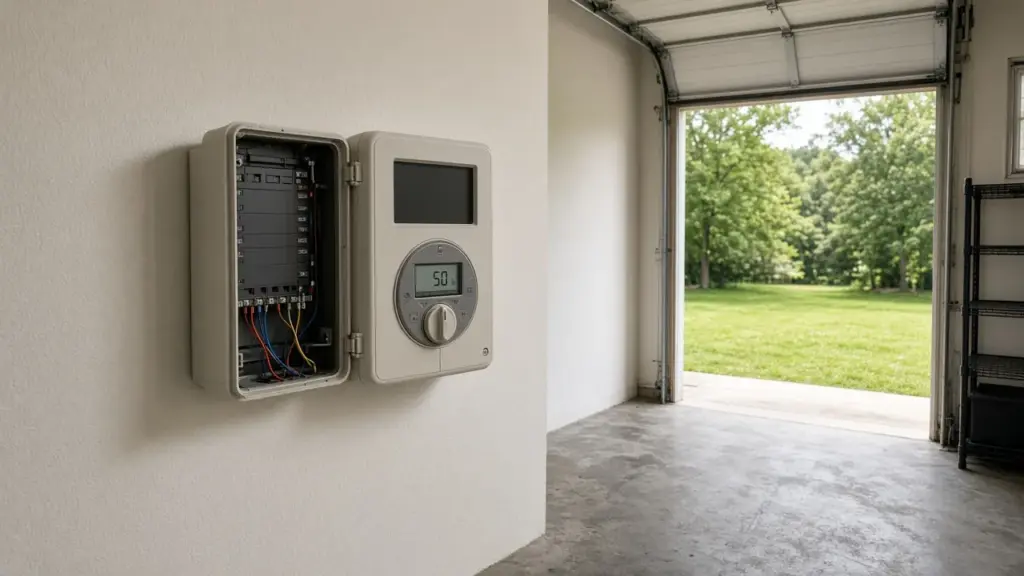
Seasonal adjust is the easiest way to follow this monthly pattern. Set your summer baseline at 100 percent. Then lower the percentage as the season changes, for example to a fraction of that in spring and fall. Every zone scales proportionally, so shaded and sunny zones keep their relative balance. On many controllers, seasonal adjust is a single button or dial setting, which makes monthly changes take only seconds.
Some controllers allow a different percentage for each month to be entered once and applied automatically. If yours does, set the whole year in spring and review it each season.
Keep a Watering Journal
A simple journal makes next year easier. Note the date, the seasonal adjust percentage, rainfall, and how the lawn looked. Over a year, the journal shows which months needed more or less water than expected in your yard. Many homeowners find their lawn does well on less water than they assumed once they track it.
Cycle and Soak in Every Season
Cycle and soak is not just for summer. Clay absorbs water slowly all year, so even shorter fall and spring run times benefit from being split into two cycles on spray zones. The main change through the year is total run time, not the need for soak periods.
Frequently Asked Questions
How should I adjust sprinkler run times through the year in Dallas?
Water most in July and August, reduce gradually in fall, water little or not at all in winter, and increase gradually in spring as grass grows.
Can I water more than twice a week in summer?
Automatic sprinklers are limited to two assigned days. Hand watering is allowed on any day.
Should I turn off my sprinklers in winter?
Many dormant lawns need little irrigation in winter. Water occasionally during extended dry periods.
What is seasonal adjust on a controller?
A percentage that scales all run times up or down at once, making monthly changes simple.
Get Help Setting Up Your Schedule
We measure system output, set seasonal schedules, and fix coverage problems. See our sprinkler repair service, or contact us to schedule.
Request Service or call 214-227-7444
We serve homes throughout Dallas and nearby North Texas communities.