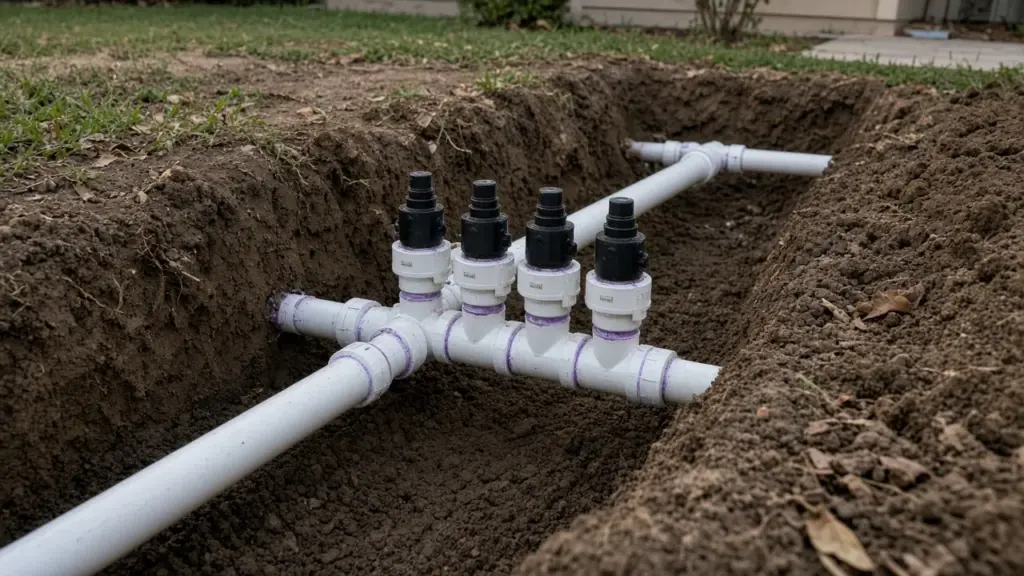
Homeowners often ask whether they need a permit before sprinkler work begins. The honest answer is that it depends on the kind of work. Replacing a broken head is routine maintenance. Installing a new system or making major changes to one is a different matter, and in Dallas, as in many Texas cities, that kind of work generally involves a permit and inspection.
This guide explains the general framework, why permits exist for irrigation, and how to confirm what your specific project requires. Rules and procedures change, so always check current requirements with the City of Dallas before work begins.
Why Irrigation Is Regulated
Lawn irrigation connects directly to the public drinking water supply. If water from a sprinkler system flows backward into household or city pipes, it can carry fertilizer, pesticides, bacteria, and soil into drinking water. That is why backflow prevention is required on irrigation systems. Our guide to what a backflow preventer does explains how these devices protect the water supply.
Irrigation also uses a large share of residential water in North Texas during summer. State and local rules aim to make sure systems are designed and installed to use water efficiently, with features such as rain and freeze sensors and proper spacing.
The State Framework
In Texas, the Texas Commission on Environmental Quality (TCEQ) sets rules for landscape irrigation. Those rules cover who can install and repair irrigation systems, design and installation standards, and backflow prevention. State rules also direct larger cities to adopt local irrigation ordinances that include permitting and inspection of new irrigation systems.
Under state rules, irrigation work for hire generally must be performed by or under the supervision of a licensed irrigator. Our articles on why Texas requires licensed irrigators and what a TCEQ irrigation license means for your repair cover licensing in more detail.
Work That Typically Needs a Permit
In Dallas, the kinds of projects that typically require an irrigation permit include:
- Installing a new irrigation system
- Major expansions or modifications, such as adding zones or significantly altering the system
- Installing or replacing backflow prevention assemblies, which usually also triggers testing requirements
Requirements can vary by project and change over time. The City of Dallas’s development services department is the authority on what needs a permit, the fees involved, and how inspections are scheduled.
Work That Usually Does Not
Routine repairs generally do not require a permit. Examples commonly include:
- Replacing broken sprinkler heads or nozzles
- Adjusting heads and spray patterns
- Repairing a small leak in a lateral line
- Replacing a valve solenoid or diaphragm
- Adjusting controller programming
Even when a permit is not needed, repairs should follow state standards. Keep in mind that some repairs that seem simple, such as replacing a backflow preventer, may carry permit and testing requirements.
Backflow Testing
Backflow prevention assemblies generally must be tested by a certified backflow prevention assembly tester when installed, and cities may require periodic testing afterward. Test results are typically submitted to the water utility. Our guide to backflow testing explains who can test and when testing is required.
Inspections
When a permit is required, the city typically inspects the work. For new systems, inspection may check items such as the backflow preventer, rain and freeze sensor, and compliance with design standards. Some inspections may require trenches or connections to remain visible until inspected, so coordinate timing with the installer.
Who Pulls the Permit?
In most cases, the licensed irrigator or contractor performing the work pulls the permit. Ask any contractor directly whether your project requires a permit and whether they will obtain it. A reputable contractor should be able to explain which requirements apply.
If you are doing work yourself on your own property, state rules include some exceptions for homeowners, but local permit and backflow requirements may still apply. Check with the city before starting a new installation or major change.
Why Permits Protect Homeowners
Permits can feel like paperwork, but they serve a purpose:
- Safety of the water supply. Proper backflow prevention protects your household and neighbors.
- Quality of work. Inspections catch problems that could lead to leaks, waste, or failures.
- Records. Permit records document work done on the property, which can matter when you sell.
- Compliance. Systems installed without required permits or backflow protection may need corrections later.
Questions to Ask Before a Project
- Does this project require a permit in Dallas?
- Who will obtain the permit and schedule inspections?
- Will the backflow preventer need to be tested, and who will test it?
- Will the system include a working rain and freeze sensor?
- Is the person doing the work licensed for irrigation?
- How long will permitting and inspection add to the schedule?
Buying or Selling a Home
If you are buying a home with an irrigation system, ask about its age, any recent backflow test results, and whether major work was permitted. If you are selling, gathering those records can help answer buyer questions.
HOA and Deed Restrictions
Some Dallas neighborhoods have homeowners associations or deed restrictions with their own landscape rules. Those rules do not replace city requirements, but they can affect what you install and where. Check HOA guidelines before a major irrigation project, particularly for front yards.
Planning Ahead Saves Time
Permit and inspection steps can add time to a project, so build them into your plans. If you are installing irrigation as part of a larger landscape or construction project, coordinate the irrigation permit with other work. Scheduling the inspection before sod or mulch covers trenches can avoid rework.
Where to Confirm Current Rules
Because requirements and procedures change, rely on the source:
- City of Dallas development services for permit requirements, fees, and inspections
- Dallas Water Utilities for backflow testing and submission requirements, and for watering rules
- TCEQ for state irrigation rules and licensing
Replacing an Entire System
When an old system is replaced rather than repaired, the project is usually treated like a new installation. That can mean a permit, a new or tested backflow preventer, a rain and freeze sensor, and inspection. Our guide to whether it is time to replace your sprinkler system covers the decision itself. If you are weighing a large repair against replacement, ask how each option would be handled from a permitting standpoint so you can compare timelines as well as costs.
Rain and Freeze Sensors on Existing Systems
Dallas requires rain and freeze sensors on automatic irrigation systems. If your existing system lacks a working sensor, adding one is a straightforward improvement that brings the system in line with city rules. A sensor replacement or addition is typically handled as a repair, but confirm with the city if you are unsure. A working sensor also saves water by skipping cycles after rain and during freezing weather.
Frequently Asked Questions
Do I need a permit to install a sprinkler system in Dallas?
New irrigation systems typically require a permit and inspection in Dallas. Confirm current requirements with the city before work begins.
Do I need a permit to replace a sprinkler head?
Routine repairs such as replacing heads or nozzles generally do not require a permit.
Does replacing a backflow preventer need a permit?
It may. Backflow assemblies typically require testing after installation, and permit requirements may apply. Check with the city.
Who is responsible for pulling the permit?
Usually the licensed irrigator or contractor doing the work. Ask before the project starts.
Get Help Planning Irrigation Work
We handle sprinkler repairs and can help you understand what your project involves. See our sprinkler repair service, or contact us with questions.
Request Service or call 214-227-7444
We serve homes throughout Dallas and nearby North Texas communities.